

- March 12, 2026
- Posted by: amatasiamcorpltd
- Category: Blockchain, NFT
Phra Somdej Wat Rakang (The King of Amulets)
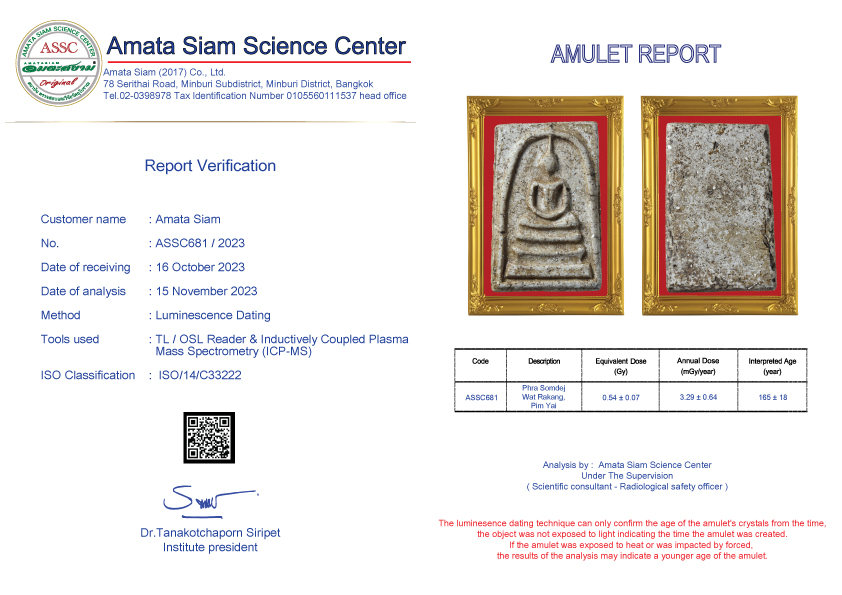
Origin and Creation:
Phra Somdej Wat Rakang was created during the Rattanakosin Period, specifically during the reign of King Rama IV. These sacred amulets were meticulously handcrafted and consecrated by Somdej Phra Buddhacarya (Toh Brahmaransi), one of the most revered monks in Thai history. The creation occurred primarily between 1866–1871 AD (2409–2414 BE). Unlike many other amulets found in pagodas, Phra Somdej was distributed by the master himself as a gift of faith and protection to the people.
| Topic | Description |
| Creator | Somdej Phra Buddhacharn (Toh Bramaransi), the former abbot of Wat Rakang. |
| Era | Rattanakosin Era, during the reigns of King Rama IV and King Rama V. |
| Creation Period | Primarily between 1866 – 1872 (B.E. 2409 – 2415). |
| Materials | Limestone (shell lime) mixed with 5 Sacred Powders, dried rice, and diverse holy minerals. |
| The 5 Sacred Powders | Pathamang, Itthijae, Maharaj, Buddhakhun, and Trinisinghae powders. |
| Philosophy | Created to be distributed to people for protection and to remind them of the Buddha’s teachings. |
| Artistic Design | Minimalist and graceful, attributed to Luang Vijarn Jiarai, a royal court artisan. |
Discovery History:
Unlike the other members of the Benjapakee set, which were rediscovered after being buried in ancient pagodas for centuries, Phra Somdej Wat Rakang was never “lost.” These amulets were created and distributed directly by Somdej Phra Buddhacharn (Toh Bramaransi) between B.E. 2409 and 2415.
The “discovery” of these amulets usually falls into two categories:
- Hand-to-Hand Succession: Most authentic pieces were handed down through generations of noble families, royal court officials, and disciples who received them directly from Somdej Toh.
- Temple Storage: After Somdej Toh passed away, remaining amulets were found stored in the Ho Trai (Sermon Hall) and the ceilings of the temple buildings at Wat Rakang Khositaram. These were gradually released to the public during temple renovations.
Because they were not buried underground, they lack the heavy mineral crusts (Kru stains) seen on Phra Rod or Phra Soom Kor, making their “clean” but aged surface a primary point of identification.
| Topic | Description |
| Discovery Type | “Phra Ban” (House Amulet): Not a buried treasure, but a continuously possessed heirloom. |
| Direct Distribution | Distributed by Somdej Toh himself to disciples and the public between 1866–1872. |
| Temple Findings | Small batches were found stored in the Ho Trai (Library) and under the ceilings of Wat Rakang during renovations. |
| Surface Condition | Clean Surface: No heavy crypt stains (Kru stains) because they were not buried in soil or pagodas. |
| Succession Path | Passed down primarily through noble families, royal officials, and high-ranking monks. |
| First Public Fame | Gained widespread national fame shortly after Somdej Toh’s passing in the late 19th century. |
Buddha Characteristics & Artistic Style:
The artistic essence of Phra Somdej Wat Rakang represents the pinnacle of Rattanakosin era minimalist art. The overall shape is a perfect rectangular frame, often compared to a “piece of cake” (Chin-Phak), which symbolically represents the Four Noble Truths. Within this frame sits the Buddha figure in a serene meditation posture, encased by a thick, rounded bell-shaped arch (Sum-Kครอบแก้ว) that resembles a rainbow, providing a sense of divine protection.
The Buddha silhouette itself is highly abstract, featuring no facial features like eyes, nose, or mouth, which emphasizes the purity of the Dhamma. The torso is typically shaped like a V-style or barrel-chest, tapering down to a slim waist, sitting atop a three-tiered base that represents the Triple Gem (Buddha, Dhamma, and Sangha). The texture of the amulet, known as “Nua Num” (Soft Texture), is a result of the masterpiece blend of shell lime and Tung oil. Over time, the surface develops natural wrinkles, “crab’s eye” pits, and a “living” patina that makes each piece unique as it ages.
| Feature | Description |
| Overall Shape | Rectangular “Chin-Phak” frame, symbolizing the Four Noble Truths. |
| The Arch (Sum) | Bell-Shaped Arch: A thick, rounded rainbow-like curve providing a protective aura. |
| The Buddha Figure | Abstract Minimalism: Features no eyes, nose, or mouth, focusing on spiritual purity. |
| Chest (Ura) | V-Shape or Barrel Style: Broad chest tapering down to a slim, elegant waistline. |
| The Base (Thaan) | Three-Tiered Base: Representing the Triple Gem (Buddha, Dhamma, Sangha). |
| Material Texture | “Nua Num” (Soft Texture): Aged shell lime mixed with Tung oil, creating a “living” patina. |
| Back Surface | Features “Crab’s Eye” (tiny pits) or “Water Ripples” from natural dehydration. |
Scientific Dating using OSL and LA-ICP-MS:
The scientific authentication of Phra Somdej Wat Rakang represents a shift from subjective “eye-judging” to empirical data. Using Optically Stimulated Luminescence (OSL), scientists can determine the last time the materials were exposed to intense light or heat. Since Phra Somdej is a lime-based amulet (made from crushed sea shells) that did not undergo high-heat firing like clay amulets, OSL is used to analyze the sedimentation age or the “re-crystallization” period of the calcium carbonate since it was molded approximately 150–160 years ago. This effectively distinguishes authentic 19th-century pieces from modern chemical-pressed imitations.
Furthermore, Laser Ablation Inductively Coupled Plasma Mass Spectrometry (LA-ICP-MS) acts as a chemical “biopsy” of the amulet. This technique analyzes the trace elements and rare earth minerals within the shell lime. Because the shells and minerals used by Somdej Toh were sourced from specific geological areas in the mid-19th century, the chemical profile must match known authentic standards. LA-ICP-MS can also detect the specific signatures of the Five Sacred Powders and natural binders like Tung oil or palm sugar, while flagging modern synthetic polymers or industrial additives that prove a forgery.
| Method | Measurement | Significance for Phra Somdej |
| OSL Dating | Analysis of crystallization energy in Calcium Carbonate grains. | Confirms 150+ Years: Verifies that the amulet was molded during the mid-to-late 19th century. |
| LA-ICP-MS Analysis | TAnalyzing the elemental concentration within solid materials. | Chemical Fingerprint: Matches the geological source of 19th-century materials and natural binders. |
| Material Integrity | Detection of Synthetic Polymers and industrial resins. | Forgery Detection: Proves the absence of modern chemical agents used to simulate hardness or age. |
Spiritual Attributes & Beliefs:
The spiritual significance of Phra Somdej Wat Rakang is considered the ultimate among all Thai amulets, earning it the title “The Emperor of Amulets.” It is believed that Somdej Phra Buddhacharn (Toh Bramaransi) infused these amulets with the profound power of the “Chinnabanchorn” incantation, creating a holistic field of protection and prosperity for the wearer.
| Topic | Spiritual Benefit |
| Metta Mahaniyom | Great Mercy & Charisma: Makes the wearer beloved, respected, and trusted by people at all levels. |
| Maha Lap | Prosperity & Fortune: Attracts wealth, business success, and continuous financial flow. |
| Klaew Klaad | Miraculous Evasion: Protection from accidents, disasters, and all forms of physical harm. |
| Enhance Destiny | Supportive Karma: Prevents the wearer’s life from falling into hardship; supports continuous growth. |
| Spiritual Peace | Calm & Protection: Shields against black magic and brings inner peace to the household. |
Phra Nang Phaya (The Queen of Amulets)
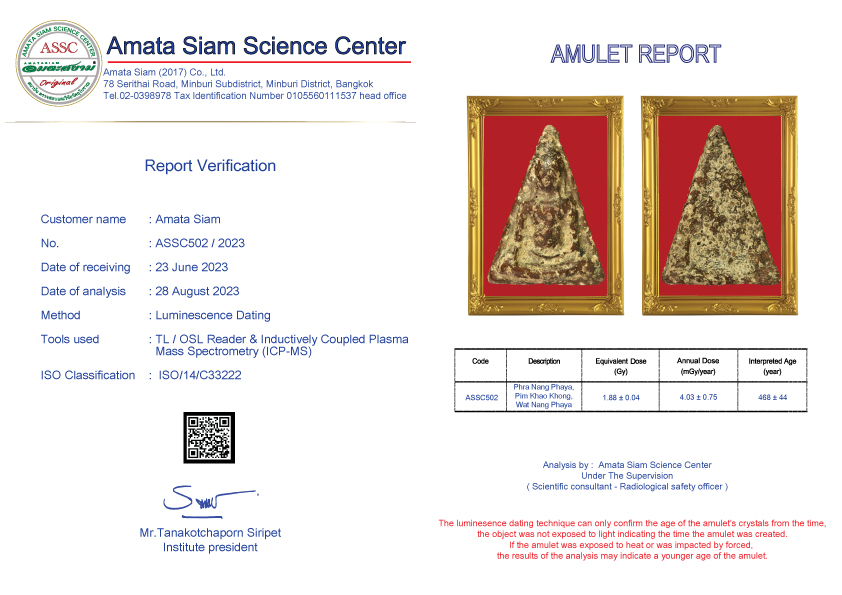
Origin and Creation:
The Phra Nang Phaya amulets originated during the Ayutthaya Period, specifically around 1548–1563 AD (approx. 2090–2105 BE). According to historical consensus and local chronicles, the creation was commissioned by Queen Wisutthi Kasattri, the royal consort of King Maha Thammaracha and the esteemed mother of King Naresuan the Great. The amulets were consecrated and enshrined within the central stupa (chedi) of Wat Nang Phaya in Phitsanulok Province to ensure spiritual protection and the prosperity of the Buddhist faith.
| Topic | Description |
| Founder | Queen Wisutkasat, the royal consort of King Maha Thammaracha. |
| Historical Role | She was the mother of King Naresuan the Great. |
| Construction Period | Mid-Ayutthaya Period, around B.E. 2090 – 2100. |
| Purpose | To be enshrined in the stupa of Wat Nang Phaya as a royal merit-making. |
| Location | Wat Nang Phaya, Phitsanulok Province (near Wat Phra Si Rattana Mahathat). |
| Artistic Style | Ayutthaya Mixed with Sukhothai (The “Queen” style). |
| Material Composition | Fine-grained baked clay mixed with sacred sand and minerals. |
Discovery History:
The primary discovery, known as the “Gru” opening, occurred in 1901 AD (2444 BE) during the reign of King Chulalongkorn (Rama V). The discovery took place while the temple grounds were being prepared for the Royal Visit to witness the casting of the Phra Buddha Chinnarat replica. A vast quantity of these triangular earthen amulets was unearthed from the collapsed foundation of the ancient stupa. Upon discovery, the temple presented the amulets to King Rama V, who subsequently bestowed them upon the royal entourage and high-ranking officials.
| Topic | Description |
| Origin | Wat Nang Phaya, Phitsanulok Province. |
| Estimated Age | Approx. 400 – 500 years (Ayutthaya Period). |
| Major Discovery | Found in 1901 (B.E. 2444) during the visit of King Rama V. |
| Historical Creator | Believed to be created by Queen Wisutkasat. |
| Discovery Context | Found buried within the collapsed pagoda (stupa) area. |
| Subsequent Discoveries | Found again in 1944 (B.E. 2487) and later in the temple grounds. |
Buddha Characteristics & Artistic Style:
Phra Nang Phaya is characterized by its distinct equilateral triangular shape. The artistic style represents the transition between the Sukhothai and Ayutthaya schools of art. The Buddha is depicted in the Subduing Mara (Maravijaya) posture, seated on a simple raised base without a decorative throne. The elegance of the slender limbs and the serene facial expression reflect the high craftsmanship of the royal artisans of that era.
| Feature | Description |
| Shape | Distinctive Isosceles Triangle with a flat base and tapered top. |
| Posture | Pang Maravijaya (Victory over Mara), seated in a cross-legged position. |
| Face | Oval or heart-shaped, influenced by Sukhothai Art, showing elegance. |
| Torso | Broad chest with a slim waist, creating a “V” shape or “Athletic” look. |
| Arms | The right arm is long and curves gracefully down to the right knee. |
| Halo/Ears | Long, slender ears that stretch down near the shoulders. |
| Artistic Essence | A blend of Sukhothai and Ayutthaya styles, reflecting royalty. |
| Texture | “Nua Din” (Baked Clay) – grainy texture with visible minerals (sand and gravel). |
Scientific Dating using OSL and LA-ICP-MS:
The Phra Nang Phaya, known as the “Queen of Amulets” from the Ayutthaya period, is traditionally authenticated by visual inspection. However, modern scientific methods provide undeniable proof of its age and material composition:
1. OSL (Optically Stimulated Luminescence Dating)
- The Science: This technique measures the time elapsed since the clay was last exposed to high heat (fired in a kiln). Clay contains minerals like Quartz that trap ambient radiation over centuries.
- The Result: For an authentic Phra Nang Phaya, the OSL test should yield a date of approximately 400–500 years, confirming its creation during the 21st–22nd Buddhist Century (the reign of King Maha Thammaracha). This distinguishes ancient artifacts from modern replicas.
2. LA-ICP-MS (Laser Ablation Inductively Coupled Plasma Mass Spectrometry)
- The Science: This is a high-precision elemental analysis that can detect chemical “fingerprints” at the parts-per-billion (ppb) level.
- The Result: * Geological Origin: It confirms if the clay’s mineral profile matches the soil of the Phitsanulok region.
- Purity Check: It detects modern synthetic materials, chemical binders, or industrial pigments. Authentic ancient amulets will only show natural mineral elements without any 20th-century chemical additives.
| Method | Measurement | Significance |
| OSL Dating | Accumulated Energy in minerals (Quartz/Feldspar) from the last firing. | Absolute Age: Confirms if the amulet was fired ~400–500 years ago (Ayutthaya era). |
| LA-ICP-MS Analysis | Analyzing the elemental concentration within solid materials. | Material Origin: Matches the clay’s chemical profile to the Phitsanulok region. |
| Purity Check | Detection of Modern Polymers or synthetic binders. | Authenticity Proof: Ensures no 20th-century chemicals or resins were used in the making. |
| Digital Twin | Linking physical lab results to the Blockchain/NFT. | Transparency: Provides a permanent, unalterable record for international collectors. |
Spiritual Attributes & Beliefs:
“Phra Nang Phaya is revered as the ‘Queen of Amulets’ within the prestigious Benjapakee set. Originating from the Ayutthaya period, this sacred icon is believed to bestow supreme Metta Mahaniyom (Compassion & Popularity) and Maha Amnat (Great Authority) upon its possessor. It is highly sought after by leaders and executives for its perceived power to enhance leadership charisma, command respect, and ensure triumph over all obstacles. Beyond its protective grace (Klaew Klaad), it serves as a symbol of feminine strength and divine prosperity, bridging ancient spiritual protection with timeless elegance.”
| Topic | English Description |
| Metta Mahaniyom | Loving-Kindness & Charm: Making the wearer beloved and well-received by others. |
| Maha Amnat | Supreme Authority: Enhancing leadership, power, and the ability to command respect. |
| Klaew Klaad | Miraculous Evasion: Protecting the wearer from accidents, dangers, and unseen obstacles. |
| Victory & Success | Barami & Victory: Helping the wearer achieve triumph in negotiations and life goals. |
| Protection | Superior Protection: Safeguarding against physical harm and spiritual negativity. |
| Queen of Power | Special Attribute: Highly recommended for women in leadership or executive roles. |
Phra Phong Suphan (The Amulet of Eternal Grace)
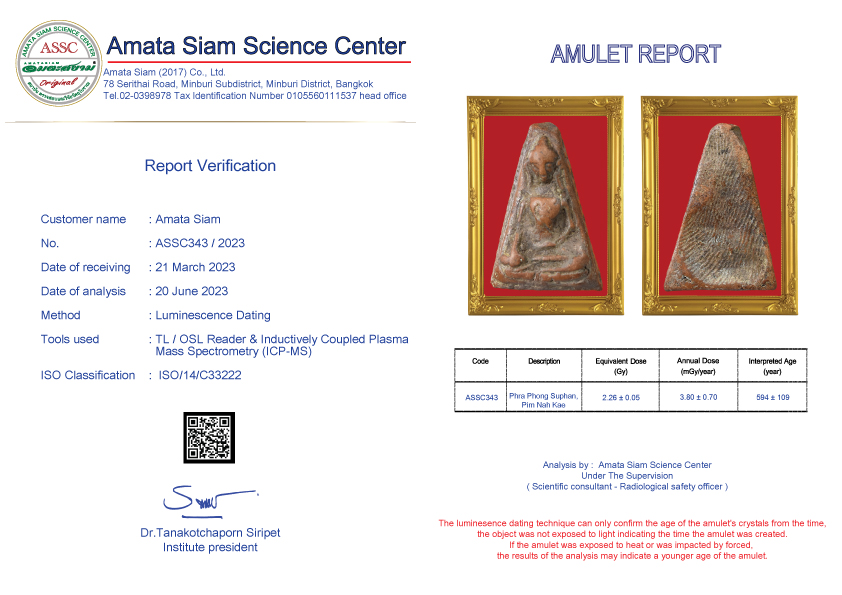
Origin and Creation:
Phra Phong Suphan was created during the Early Ayutthaya – U-Thong Period at Wat Phra Sri Rattana Mahathat in Suphan Buri. Historical evidence points to its creation by King Borommarachathirat II (Chao Sam Phraya). It was discovered in 1913 when the main prang (tower) of the temple was opened.
| Topic | Description |
| Founder | King Maha Dharmaraja Li Thai (Phra Piya Mahathammaraja) of the Sukhothai Kingdom. |
| Spiritual Leader | A group of great ascetics led by Reusi Phimphilalai. |
| Construction Period | U-Thong Era, approximately 600 years ago (around B.E. 1890-1920). |
| Evidence | The “Golden Tablets” (Lan Thong) found inside the crypt, detailing the creation process. |
| Location | Wat Phra Sri Rattana Mahathat, Suphanburi Province. |
| Material Composition | Fine clay mixed with 108 types of sacred herbs, flower pollens, and “Wan” (auspicious plants). |
| Firing Process | Ancient kiln firing which resulted in various colors: red, yellow, green, and black. |
Discovery History:
The major discovery occurred in 1913 (B.E. 2456). It began when a group of locals secretly dug into the main stupa (Prang) of the temple and found a vast treasure of amulets and golden tablets. Later, during the official opening of the crypt, a significant “Golden Tablet” (Lan Thong) was discovered.
The inscription on the tablet provided historical evidence that the amulets were created by Phra Maha Dharmaraja Li Thai (or Phra Piya Mahathammaraja) and blessed by a group of ascetic sages (Reusi), led by Reusi Phimphilalai. This makes Phra Phong Suphan one of the few ancient amulets with a clearly documented origin story regarding its creator and the ceremony.
| Period | Event & Context |
| Initial Discovery (1913) | The discovery occurred in 1913 (B.E. 2456) at the main Prang (Stupa) of Wat Phra Sri Rattana Mahathat, Suphanburi. |
| Looting Incident | It began when a group of Chinese immigrants secretly dug into the crypt and found vast treasures, including gold and amulets. |
| Official Opening | Following the news, Phraya Sunthornburi, the Governor, officially opened the crypt to preserve the remaining artifacts. |
| The Golden Tablet | The most significant find was the “Golden Tablet” (Lan Thong), which provided a written record of the creator and the amulets. |
| Royal Visit | In 1913, King Rama VI visited the site and was presented with Phra Phong Suphan amulets by the governor. |
Buddha Characteristics & Artistic Style:
Phra Phong Suphan is celebrated as the “King of Baked Clay Amulets” from Suphanburi, reflecting the pinnacle of U-Thong Art. Its key characteristics are as follows:
- Pang Maravijaya (Victory over Mara): The Buddha is seated in the Maravijaya mudra. A distinctive feature is the right hand, which is often long and slender, with fingers reaching down to the base in a graceful curve.
- The Triangular Shape: The amulet has a prominent isosceles triangle shape, with a slightly rounded or blunt top and a flat base.
- Facial Features (U-Thong Style): The face is typically square-shaped with a strong jawline, reflecting the “Suphanburi U-Thong” influence. It features a prominent nose, a gentle smile, and long ears (Phra Karna) that extend down towards the shoulders.
- Body Anatomy: The torso is robust with broad shoulders and a slim waist. The chest is slightly puffed out, showing a dignified and powerful posture.
- Material and Texture: Made from exceptionally fine baked clay mixed with various herbs and pollens. The texture is often described as “smooth yet firm” (Nua Num Num).
- The Thumbprint (Signature Mark): The most legendary feature of an authentic Phra Phong Suphan is the thumbprint on the back. It is believed to be the fingerprint of the ancient ascetic sages (Reusi) who pressed the amulets into the molds.
- Colors: Due to the ancient firing process, the amulets come in various shades, including red, green (most rare), yellow, and black.
| Feature | Description |
| Shape | Isosceles Triangle with a flat base. The top is often rounded or blunt. |
| Artistic Style | U-Thong Art (Suphanburi school), reflecting strength and serenity. |
| Face | Known as “Square Face” (Na-Kae). Features a strong jawline and broad forehead. |
| Posture | Pang Maravijaya (Victory over Mara). The Buddha sits in a full meditative pose. |
| Arms | The right arm is long and slender, with the hand reaching down to the base. |
| Chest | Broad, puffed chest with a slim waist, showing a powerful physique. |
| The Back | Features a Thumbprint (Reusi’s mark) from the pressing process. |
| Texture | “Nua Num” – Fine, smooth clay with natural age-related cracks or patina. |
Scientific Dating using OSL and LA-ICP-MS:
The scientific authentication of Phra Phong Suphan through Optically Stimulated Luminescence (OSL) and Laser Ablation Inductively Coupled Plasma Mass Spectrometry (LA-ICP-MS) represents the highest standard of verification for ancient baked-clay amulets. The OSL technique works by measuring the accumulated radiation dose in mineral grains, such as quartz and feldspar, trapped within the amulet’s clay. When the amulet was fired in a kiln approximately 600 years ago during the U-Thong era, the previous “geological clock” was reset to zero. By stimulating these grains with light in a laboratory, the emitted energy allows scientists to calculate the exact time elapsed since the firing, effectively distinguishing an authentic 14th-15th century artifact from a modern imitation.
In parallel, LA-ICP-MS Laser Ablation analysis provides a comprehensive “chemical fingerprint” of the amulet. This technique ionizes the sample and measures the concentration of trace elements and rare earth metals with extreme precision (down to parts per billion). Since the clay used to create Phra Phong Suphan was sourced from specific ancient pits in Suphanburi Province, the elemental profile must match the unique geological signature of that region. Furthermore, LA-ICP-MS can detect the chemical markers of the 108 types of sacred herbs and organic pollens mentioned in the “Golden Tablets,” while simultaneously ensuring the absence of modern synthetic polymers, resins, or chemical dyes that are commonly used in counterfeits. Together, these two methods transform historical belief into verifiable scientific fact.
| Method | Measurement | Technical Significance |
| OSL Dating | Luminescence signal from Quartz/Feldspar grains since the last heat exposure (firing). | Age Confirmation: Verifies the firing age is ~600 years, matching the U-Thong period. |
| LA-ICP-MS Analysis | Analyzing the elemental concentration within solid materials. | Geological Fingerprint: Matches the clay profile to the specific soil of Suphanburi Province. |
| Organic Profile | Analysis of ancient herbs and pollens (108 sacred materials) within the clay. | Authenticity Check: Ensures the mixture follows the traditional “Golden Tablet” instructions. |
| Contamination Test | Scanning for Modern Polymers or synthetic dyes/resins. | Integrity Verification: Proves the amulet is free from 20th-century chemical binding agents. |
Spiritual Attributes & Beliefs:
Phra Phong Suphan is known as the “King of the Fine-Clay Amulets” and is one of the most revered members of the Benjapakee set. Its spiritual essence reflects the blend of royal prestige and the ascetic power of ancient hermits.
- Maha Amnat (Supreme Authority and Charisma) Phra Phong Suphan is renowned for granting the wearer “Maha Amnat.” It enhances leadership qualities, prestige, and the power to command respect. This makes it a preferred choice for high-ranking officials, executives, and those in positions of authority.
- Metta Mahaniyom (Great Mercy and Charm) Despite its powerful appearance, the amulet carries deep “Metta.” It influences others to feel compassion and kindness toward the wearer. It is believed to smooth over negotiations and help the owner gain favor from superiors and colleagues.
- Kong Grapan Chadtri (Invulnerability) Historically, Phra Phong Suphan is famous for its protective shield. Legend says it protects the body from physical harm and sharp weapons. This belief is rooted in the “U-Thong” art style, which reflects strength, stability, and resilience.
- Prosperity and Good Fortune According to the “Golden Tablet” (Lan Thong) found in the crypt, those who worship this amulet with a pure heart will never fall into poverty. It is believed to bring “Chok Lap” (Good Luck) and sustain the wearer’s wealth and status.
| Topic | Description |
| Maha Amnat | Supreme Authority: Enhances the wearer’s charisma, prestige, and power to command respect from others. |
| Metta Mahaniyom | Great Mercy: Fosters compassion and kindness from people around the wearer, making them well-liked. |
| Kong Grapan | Invulnerability: Belief in the protection of the physical body against sharp weapons and physical harm. |
| Prosperity | Wealth & Fortune: Based on the “Golden Tablet” inscription, it is believed the owner will never fall into poverty. |
| Business Success | Smooth Negotiations: Helps in career advancement and smooths out difficult business deals or negotiations. |
| Victory | Triumph over Rivals: Grants the power to overcome obstacles and emerge victorious in competitive situations. |
Phra Soom Kor (Possess me, and you shall never be poor)
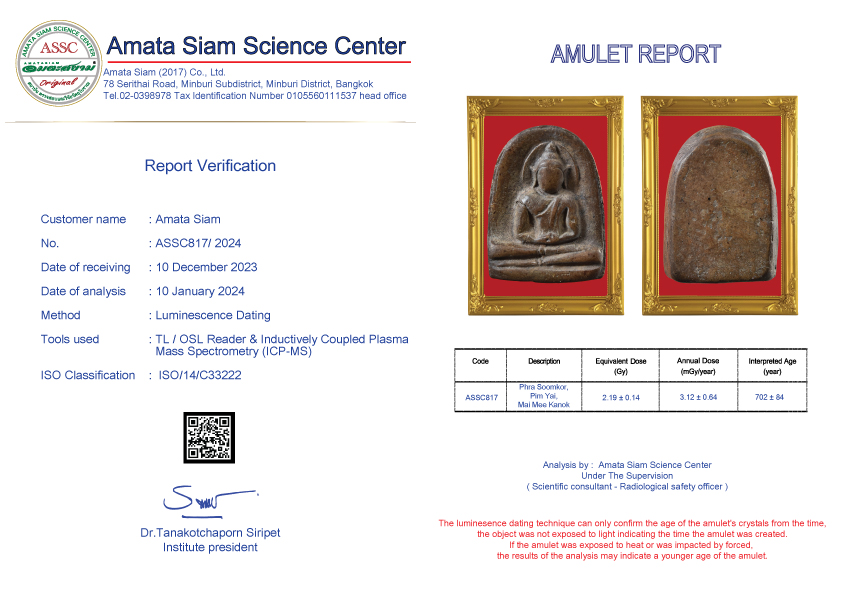
Origin and Creation:
The origin of Phra Soom Kor is deeply tied to the ancient civilization of Kamphaeng Phet Province, dating back over 600–700 years to the Sukhothai and early Ayutthaya periods. These amulets were discovered within the great stupas of Wat Phra Borommathat and several temples in the “Thung Sethi” (Millionaire’s Field) area. According to the “Golden Tablet” (Lan Thong) found during the excavation in 1849 (B.E. 2392) by Somdej Phra Buddhacharn (Toh Bramaransi), the amulets were created by a group of highly realized ascetics (Reusi) to preserve the Buddhist faith and provide prosperity to the people.
The creation of Phra Soom Kor is a masterpiece of ancient ceramic arts. The primary material is fine-grained baked clay mixed with sacred minerals and “Mual Sarn” (holy ingredients) such as jasmine flowers, dried pollens, and “Wan” (sacred herbs). The most distinctive feature is the “Rae Dok Ma Kham” (Tamarind flower minerals)—tiny reddish-brown mineral spots scattered throughout the surface. The clay was pressed into a thumb-shaped mold featuring a Buddha sitting in a meditation posture within a graceful lotus-leaf or “arch” frame, which gave the amulet its name, “Soom Kor.”
| Topic | Description |
| Origin | Found in the Thung Sethi field, Kamphaeng Phet Province. |
| Era | Sukhothai – Early Ayutthaya (approx. 600-700 years ago). |
| Creator | Ascetics (Reusi) and ancient rulers of the Kamphaeng Phet kingdom. |
| Discovery | Excavated in 1849 (B.E. 2392) from the ruins of Wat Phra Borommathat. |
| Core Material | Fine baked clay mixed with Rae Dok Ma Kham (Tamarind flower minerals). |
| Artistic Style | Sukhothai Art mixed with Sri Lankan influence, featuring a Kanok arch. |
| Legendary Slogan | “Possess me, and you shall never be poor.” |
Discovery History:
The discovery of Phra Soom Kor is one of the most well-documented and fascinating stories in the history of Thai amulets. It began in 1849 (B.E. 2392) when Somdej Phra Buddhacharn (Toh Bramaransi) went to visit his relatives in Kamphaeng Phet Province. While there, he found an ancient inscription on a Golden Tablet (Lan Thong) at Wat Phra Borommathat. The tablet provided specific directions to the ruins of several temples in an area known as “Thung Sethi” (The Millionaire’s Field) on the west bank of the Ping River.
Following the instructions on the tablet, the great stupas were opened, revealing a vast treasure of amulets buried within. Among them was Phra Soom Kor, which stood out due to its exquisite Sukhothai-style artistry. The Golden Tablet also contained a legendary proclamation that has defined the amulet’s legacy for centuries: “Me Ku Wai Mai Chon” (Possess me, and you shall never be poor). This discovery transformed the Thung Sethi area from a forgotten ruin into the source of one of the five most prestigious amulets in Thailand (the Benjapakee).
| Topic | Description |
| Year of Discovery | Found in 1849 (B.E. 2392). |
| Discoverer | Somdej Phra Buddhacharn (Toh Bramaransi). |
| Primary Location | Wat Phra Borommathat, Thung Sethi, Kamphaeng Phet. |
| Key Evidence | Information found on the Golden Tablet (Lan Thong). |
| Crypt Condition | Found within ancient stupas (pagodas) that had partially collapsed. |
| Major Temples | Found at Wat Phra Borommathat, Wat Pikul, and Wat Rue-si. |
| The Proclamation | “Whoever possesses this amulet shall never fall into poverty.” |
Buddha Characteristics & Artistic Style:
The artistic style of Phra Soom Kor is considered the masterpiece of Sukhothai Art influenced by Sri Lankan aesthetics. Its name, “Soom Kor,” is derived from the graceful arched frame that resembles the Thai letter “Kor Kai” (ก) or a lotus petal. The Buddha is depicted in the Samadhi (Meditation) posture, sitting atop a lotus base. The most iconic feature is the “Kanok” (flame-like) pattern that flows elegantly along the sides of the arch, though some variations (Phim Mai Mee Ganok) feature a plain background.
The physical material of Phra Soom Kor is unique for its fine, dense baked clay that feels “soft yet firm” to the touch. A primary identifying mark is the “Rae Dok Ma Kham”—tiny, reddish-brown mineral spots (iron oxide) that emerge from within the clay. Additionally, the surface often features “Ra Rak” (black mold stains) and fine wrinkles caused by 700 years of natural dehydration, giving the amulet a “deep and ancient” look that is difficult to replicate.
| Feature | Description |
| Amulet Shape | Thumb-shaped (Semicircle) with a curved top, resembling a lotus petal. |
| The Arch (Sum) | “Kor” Shape Frame: A graceful arch that defines the amulet’s name. |
| Buddha Posture | Pang Samadhi: The Buddha sits in a full meditation posture with hands overlapped. |
| Facial Feature | Round & Serene: Reflecting the “Sukhothai” style of happiness and tranquility. |
| Mual Sarn Marks | Rae Dok Ma Kham: Reddish-brown mineral spots scattered on the surface. |
| Surface Patina | Ra Rak & Wrinkles: Presence of black mold stains and natural aging lines. |
| Texture Feeling | “Nua Num Nuib”: Feels soft, waxy, and dense like aged chocolate or wax. |
Scientific Dating using OSL and LA-ICP-MS:
The spiritual essence of Phra Soom Kor is encapsulated in its legendary slogan found in the ancient Golden Tablet: “Me Ku Wai Mai Chon” (Possess me, and you shall never be poor). This amulet is regarded as the ultimate symbol of prosperity and abundance. It is believed that the ancient ascetics (Reusi) who created these amulets infused them with the power to attract wealth, ensure a constant flow of fortune, and protect the owner from financial downfall.
Complementing this, Laser Ablation Inductively Coupled Plasma Mass Spectrometry (LA-ICP-MS) provides a “Geological Fingerprint.” Since Phra Soom Kor was created using soil from specific pits in the Thung Sethi area of Kamphaeng Phet, its elemental profile is unique. ICP-MS analyzes trace elements and rare earth metals at the parts-per-billion (ppb) level to match the clay’s chemical signature to that of the ancient Kamphaeng Phet region. Furthermore, it can verify the presence of “Rae Dok Ma Kham” (iron oxide minerals) and organic remnants of the 108 sacred herbs mentioned in the Golden Tablet, ensuring the material composition is historically accurate.
| Method | Measurement |
| OSL Dating | Accumulated radiation energy in mineral grains since the firing process. |
| LA-ICP-MS Analysis | Analyzing the elemental concentration within solid materials. |
| Mineral Scan | Detailed analysis of “Rae Dok Ma Kham” (Iron Oxide). |
| Organic Profile | Detection of ancient herb and pollen markers. |
Spiritual Attributes & Beliefs:
The spiritual essence of Phra Soom Kor is encapsulated in its legendary slogan found in the ancient Golden Tablet: “Me Ku Wai Mai Chon” (Possess me, and you shall never be poor). This amulet is regarded as the ultimate symbol of prosperity and abundance. It is believed that the ancient ascetics (Reusi) who created these amulets infused them with the power to attract wealth, ensure a constant flow of fortune, and protect the owner from financial downfall.
Beyond financial prosperity, Phra Soom Kor is highly revered for “Metta Mahaniyom” (Great Mercy). It bestows upon the wearer a charming aura that draws compassion and kindness from others, making it ideal for business negotiations and social harmony. Furthermore, it provides strong “Klaew Klaad” (Safe Evasion) powers, shielding the owner from accidents and harm. To own a Phra Soom Kor is not just to possess a piece of history, but to hold a “Sacred Guarantee” of a stable and flourishing life.
| Topic | Spiritual Benefit |
| Ultimate Wealth | “Me Ku Wai Mai Chon”: Guarantees the owner will never fall into poverty or financial ruin. |
| Great Fortune | Maha Lap: Attracts unexpected luck and ensures a continuous flow of income and success. |
| Loving Kindness | Metta Mahaniyom: Softens the hearts of others, making the wearer beloved and well-supported. |
| Safe Evasion | Klaew Klaad: Protects against accidents and keeps the owner away from dangerous situations. |
| Business Success | Negotiation Power: Ideal for closing deals and achieving victory in competitive commerce. |
Phra Rod Wat Mahawan (The Amulet of Escape and Safety)
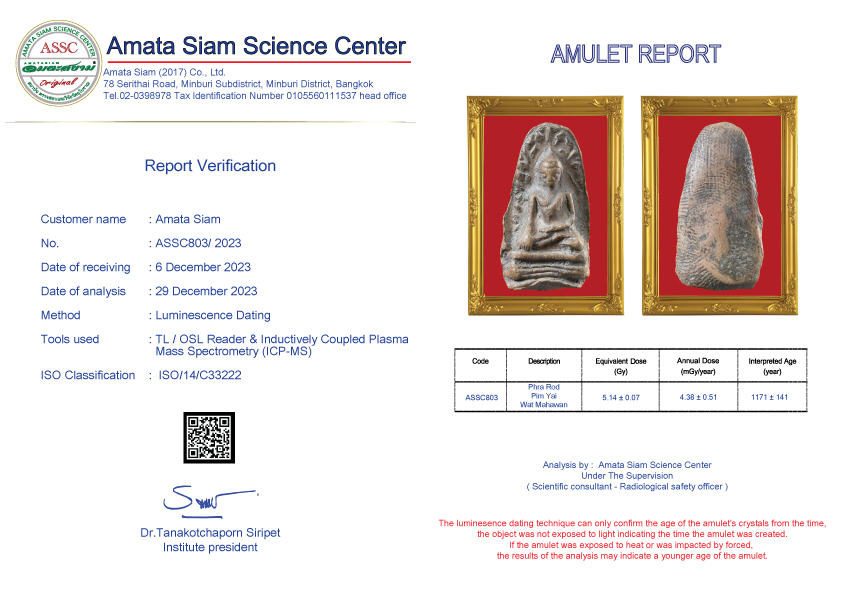
Origin and Creation:
Phra Rod is the oldest amulet in the Benjapakee set, dating back to the Hariphunchai Period (approx. 1,200–1,400 years ago). It was created during the reign of Queen Chamadevi, the first ruler of Hariphunchai (modern-day Lamphun). According to ancient chronicles, the amulets were consecrated by Rishi Narada (Phra Ruesi Narot) to be enshrined in the four corners of the city for spiritual protection.
| Topic | Description |
| Founder | Hermit Naratha (Phra Reusi Narot), one of the great ancient ascetics. |
| Patron | Queen Chamadevi, the first ruler of the Haripunchai Kingdom. |
| Construction Period | Dvaravati – Haripunchai Era, approximately 1,200 – 1,300 years ago. |
| Purpose | To be distributed to soldiers for protection and enshrined in the temple to sustain Buddhism. |
| Location | Wat Mahawan, Lamphun Province (The oldest temple in the city). |
| Material Composition | Baked clay mixed with sacred herbs and minerals, often showing diverse colors due to ancient firing. |
| Artistic Style | Pure Dvaravati – Haripunchai Art, featuring Bodhi leaf arch designs. |
Discovery History:
The primary discovery occurred in 1908 (B.E. 2451). The old pagoda (stupa) at Wat Mahawan collapsed due to its age. During the subsequent restoration and debris clearing, a large quantity of clay-baked amulets was found buried within the base of the stupa. These amulets were named “Phra Rod” (meaning “survival” or “miraculously saved”).
Later, in 1955 (B.E. 2498), another major discovery happened when the temple dug a drainage ditch, uncovering more amulets buried deep in the ground around the temple area. These are often referred to as the “Kru Kao” (Old Group) and “Kru Mai” (New Group) discoveries.
| Period | Event & Context |
| Early Discovery (Late 19th Century) | The first formal discovery occurred in 1892 (B.E. 2435) during the reign of King Rama V when the main pagoda collapsed. |
| Major Restoration (1908) | During a major renovation in 1908 (B.E. 2451), a vast number of amulets were found buried under the foundation of the old pagoda. |
| The 1955 Discovery | A significant amount of Phra Rod was unearthed during the renovation of the temple’s flooring and surrounding walls. |
| Post-1955 Excavations | Small batches continued to be found during minor repairs within the temple grounds over subsequent decades. |
| Crypt Condition (สภาพกรุ) | The amulets were found inside earthen jars and scattered within the debris of the ancient stupa. |
Buddha Characteristics & Artistic Style:
Phra Rod is renowned for its unique artistic style, reflecting the Hariphunchai art period. The key characteristics are as follows:
- Pang Maravijaya (The Victory over Mara): The Buddha is depicted in a seated position, performing the Maravijaya mudra (touching the earth with the right hand).
- Amulet Shape: It has a distinct “tapered top” or “bullet-like” shape, with a flat base. The overall form is slim and elegant.
- The Halo (Bodhi Leaves): One of the most striking features is the detailed “Bodhi leaves” or flame-like halo surrounding the Buddha’s head and body, symbolizing enlightenment and protection.
- Facial Features: The face is typically oval with a calm expression, often showing a prominent nose and well-defined ears (Phra Karna) that reach down to the shoulders.
- Material: Made from very fine-grained “baked clay.” Due to the ancient firing process, the amulets come in various colors such as yellow, green, red, and white, and the texture is exceptionally hard and dense.
- The “Narak” (The Fingerprint/Mark): On the base or back of authentic pieces, there are often subtle marks or “cracks” caused by the ancient pressing and drying process, which are key indicators for authentication.
| Feature | Description |
| Shape | Small, Leaf-shaped or tapered at the top with a rounded base. |
| Posture | Pang Maravijaya (Victory over Mara), seated on a multi-tiered pedestal. |
| Artistic Style | Dvaravati – Haripunchai Style, showing ancient and powerful aesthetics. |
| The Arch | Seated under a Bodhi Leaf Arch with delicate vein-like patterns. |
| Face | Distinctive features with a broad forehead and long, prominent nose. |
| Ears | Long ears stretching down, with the left ear often touching the shoulder. |
| Base | Typically features 4-tier pedestals, looking like stacked layers. |
| Texture | Extremely fine clay, very hard (fired), and often has a “silky” smooth surface. |
Scientific Dating using OSL and LA-ICP-MS Techniques:
To verify the age and authenticity of ancient clay amulets like Phra Rod, two advanced scientific methods are predominantly used:
1. OSL (Optically Stimulated Luminescence Dating)
- Principle: This method measures the last time the clay was exposed to intense heat (fired in a kiln) or sunlight. It calculates the “trapped electrons” within the mineral grains (like quartz or feldspar) in the clay.
- Application: Since Phra Rod is a baked-clay amulet, OSL can determine the absolute age (number of years ago) the amulet was fired. If the result points back ~1,200 years, it aligns with the Hariphunchai period.
2. LA-ICP-MS (Laser Ablation Inductively Coupled Plasma Mass Spectrometry)
- Principle: A high-precision technique used for elemental analysis. It can detect trace elements and “chemical signatures” within the clay material at parts per billion (ppb) levels.
Application: This acts as a “chemical fingerprint.” It can identify if the clay’s mineral composition matches the soil from the Wat Mahawan area in Lamphun. It also detects modern chemical additives; if modern polymers or synthetic dyes are found, the amulet is identified as a contemporary reproduction.
| Method | Measurement | Significance for Phra Rod |
| OSL Dating | Thermoluminescence energy trapped in mineral grains (Quartz). | Confirms 1,200+ Years: Distinguishes genuine Haripunchai artifacts from modern recreations. |
| LA-ICP-MS Analysis | Analyzing the elemental concentration within solid materials. | Geological Signature: Verifies if the clay source is from the Lamphun/Northern Thailand basin. |
| Mineralization Study | The growth of Calcite or Mineral crusts on the surface. | Aging Process: Confirms natural chemical changes that only occur over a millennium. |
| Non-Destructive XRF | Elemental concentration of iron, magnesium, and silica. | Composition Analysis: Ensures the material matches the “Ancient Clay” standard of Wat Mahawan. |
Spiritual Attributes & Beliefs:
Phra Rod (Wat Mahawan) The Amulet of Escape and Protection
1. The Meaning of the Name
The word “Rod” (รอด) in Thai means “to survive,” “to escape,” or “to be safe.” Therefore, this amulet is primarily known as the “Buddha of Escape.”
2. Core Beliefs & Powers
The spiritual powers of Phra Rod are often categorized into three main areas:
- Kong Grapan Chadtri (Invulnerability): Believed to protect the wearer from physical harm, sharp objects, and accidents.
- Klaew Klaad (Evasion): The power to miraculously escape from dangerous situations, disasters, or life-threatening events.
- Metta Mahaniyom (Loving-Kindness): It is also believed to bring charm and mercy, making the wearer liked and respected by others, which helps in avoiding conflicts.
| Topic | English Description |
| Klaew Klaad | Miraculous Evasion: The primary power of Phra Rod is the ability to help the wearer escape from all forms of danger. |
| Victory & Success | Triumph over Obstacles: Based on the name “Rod” (meaning to survive or pass), it helps the wearer overcome life’s challenges. |
| Metta Mahaniyom | Loving-Kindness: Bringing mercy and being well-liked by people of all levels, from superiors to subordinates. |
| Protection | Invulnerability: Belief in protection against accidents and physical harm during travels or high-risk situations. |
| Spiritual Peace | Calming Energy: Due to its creation by ancient ascetics, it is believed to bring inner peace and mindfulness. |
| Endurance | Power of Survival: Helping the wearer remain resilient and “survive” even in the most difficult business or personal crises. |